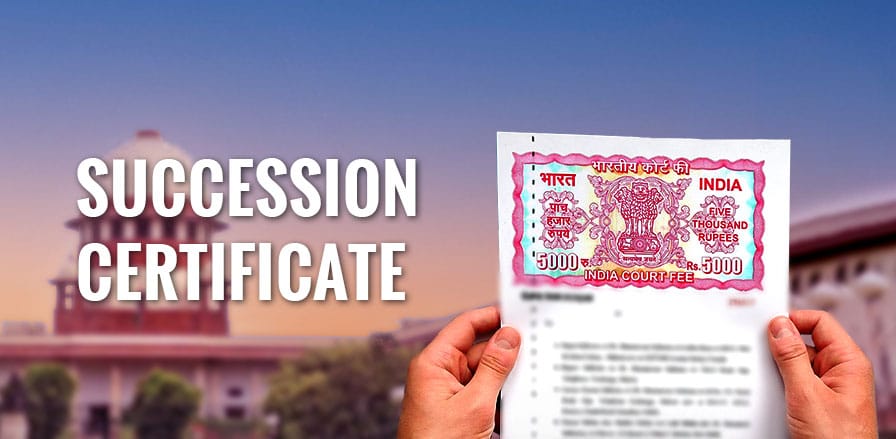
Succession Certificate: Claim your right
Succession Certificate: Claim your right
Author: Adv. Rasika Rasam
Co-Author:
Published:
Last Updated:
Are you looking to access a deceased loved one’s bank accounts, investments, or securities? In India, a “Succession Certificate” is crucial for legal heirs to claim movable assets. V A Law Offices explains the process, requirements, and why expert legal help ensures a smooth experience.
Everything You Need to Know About Succession Certificates in India
When a loved one passes away, dealing with legal formalities can feel overwhelming. One of the most important documents required to claim debts, securities, or other movable assets of the deceased is a Succession Certificate. At V A Law Offices, our team of experienced succession lawyers helps families navigate this process smoothly and legally.
What is a Succession Certificate?
A succession certificate is a court-issued legal document under the Indian Succession Act, 1925, authorizing heirs to inherit the movable assets, securities, and debts of the deceased. It essentially acts as proof of entitlement when banks, financial institutions, or companies require legal verification.
When Is a Succession Certificate Required?
When claiming savings, FDs, or bank accounts after a family member’s death.
For transfer or encashment of shares, bonds, mutual funds.
To recover debts owed to the deceased in the absence of a will.
When financial institutions demand court-authorized documentation.
Who Can Apply for a Succession Certificate?
The legal heirs of the deceased, such as a spouse, children, or parents, can apply before the District Court where the deceased resided at the time of death. The application includes details of heirs, debts, and securities, along with supporting documents
Step-by-Step Application Process
Prepare Documents: Gather the death certificate, proof of relationship, asset details, and a list of all legal heirs.
File the Petition: An application is filed under Section 372 of the Indian Succession Act in the civil court of the deceased's last residence.
Notice Publication: The court issues a public notice for objections.
Hearing: On admission of the petition, the court reviews documents and any objections raised.
NOC: If applicable, secure a no-objection certificate from other heirs.
Issuance & Execution: Upon satisfaction, the court issues the certificate; heirs can now access or transfer the assets.
Frequently Asked Questions
How long does it take to get a succession certificate?
The process may take several months owing to verification, notice periods, and hearings.
Can a succession certificate be challenged?
Yes, family members and interested parties can raise objections during the notice period, sometimes resulting in delays.
Is succession certificate needed for immovable property?
No, it is primarily for movable assets like bank accounts and securities; property transfers typically require a legal heir certificate.
Do banks accept legal heir certificates for accounts?
In most financial contexts, banks demand a court-issued succession certificate for transfer of funds; legal heir certificates are insufficient.
Who can apply for a succession certificate?
Any legal heir including spouse, children, or parents residing at the time of death in the same jurisdiction.
Why Choose V A Law Offices for Succession Certificate Matters?
Decades of expertise in succession law and inheritance
End-to-end support from documentation to court hearings
Transparent advice to avoid disputes and delays
Ensuring rightful heirs get access to financial assets promptly
Ready to secure your family's financial interests? Get expert help from V A Law Offices for succession certificate applications, legal heirships, and inheritance disputes.